Iron Man 2 (2010)


Rated: PG-13 for sequences of intense sci-fi action and violence, and some language.
Length: 124 min
Grade: DC-DD=D
Budget: $200 million
Box Office: $605 million in 7 weeks(305 U.S., 300 Intl.,)

Written by: Justin Theroux (Tropic Thunder)
Directed by: Jon Favreau (Iron Man, Zathura, and Elf)
Starring: Robert Downey Jr., Don Cheadle, Scarlett Johansson, Gwyneth Paltrow, Mickey Rourke
With: Samuel L. Jackson, Jon Favreau, Paul Bettany, Kate Mara, and Garry Shandling.

Summary:
Iron Man is preserving world peace, but a flaw in his power source is slowly killing him. When an evil Russian genius creates his own version of Iron Man, they battle, but Stark loses. To win and live, he must discover and create his own brand new element to fuel his power safely. Luckly for him, his father left him the clues he may need.

Entertainment Value: D
I love comic books, and Iron Man was one of the ones I read growing up. But just like the first one, this is terrible. At least it’s not quite as vulgar, but both my wife and I thought this was awful. When you realize the movies on the resume of these makers, it’s not so mysterious why this didn’t work.

Superficial Content: C-
Drugs/Alcohol C, Sex/Nudity C, Violence C, Language C
Several characters drink and Tony Stark gets drunk at his birthday party, while wearing his Iron Man armor. Language is right in the middle of the PG-13 scale, not terrible, but lots of sexual innuendo. There’s no sex, but there are lots of skimpily clad women. The main concern is likely violence, although I felt this one was less gruesome than the first, which opened with that scene of him doing heart surgery.

Significant Content: D
If you’re an arrogant, self-indulgent narcissist, at least you can redeem yourself through brilliant military technology. Russians are real bad guys.

Artistic/Thought Value: D
Thought value…let me think…nope, I can’t really think of anything.

Discussion Questions:
~How do you think you would react to the prospect of dying at a young age if you were as brilliant as Stark?
~Are there any people in this movie whom you would classify as a hero? Is Tony Stark a hero? Do you feel any pity for Hammer or Vanko?
~What do you think of Stark’s refusal to give his suit and technology over to the American government? Should he trust them more, as an American citizen? Is something being said about American’s keeping so much military technology to themselves and not sharing it with the world?

Poignant or memorable scenes:
~No, not really.

Overall Grade: D
Unless you want to watch a long Audi ad predicated on some absurd violence. Is Robert Downey Jr. better as Tony Stark or as Sherlock Holmes? Answer, he’s exactly the same guy in both roles, just with an accent, which is why neither franchise is entertaining.

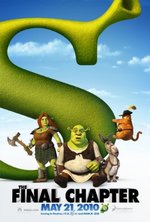
Shrek Forever After (2010)


Rated: PG for mild action, some rude humor and brief language.
Length: 93 minutes
Grade: DBAD=D+
Budget: $165 million
Box Office: $312 million in a month (226 U.S., 86 Intl.)

Written by: Josh Klausner (Date Night, Shrek the Third) and Darren Lemke (First major script)
Directed by: Mike Mitchell (Sky High, Surviving Christmas, Deuce Bigalow Male Gigolo
Starring the voices of: Mike Myers, Eddie Murphy, and Cameron Diaz
With the voices of: Antonio Banderas, Julie Andrews, John Cleese, Craig Robinson, Walt Dohrn, Lake Bell, Kathy Griffin, and Meredith Vieira.

Summary: S
hrek finds himself mired in the mind-numbing repetition of domestication and, in a moment of weakness, makes a deal with Rumplestiltskin that undoes his very existence. He has one day to restore the world to it’s proper shape, but none of his former friends even know who he is anymore.

Entertainment Value: D
First I must confess I haven’t been a big fan of the Shrek movies in general. I find them overhyped by most people. That being said, at least the other ones had their moments of humor in and along with the weak and weird plots. It’s like the writers here just completely gave up on even trying to make it funny. The plot isn’t awful, but it’s just uncompelling and what little magic the others had just wasn’t preserved here.

Superficial Content: B
Drugs/Alcohol B+, Sex/Nudity A, Violence B, Language B+
There’s some ogre drinking, some very mild language, and some scary scenes with witches and violence. It’s actually the tamest of the four movies so far, in my opinion. Barely PG. Maybe PG-6.

Significant Content: A
How can a movie this ungood have such a great message? Because it’s an ancient one. This is what some like to call a “metaphysical second chance fairy tale.” Like “It’s a Wonderful Life” and every other movie in this genre, the idea is simple. Someone with a good life thinks it would have been better if…, then when given the chance to realize what he’s lost in the alternative struggles mightily to just get back to normal, a place he now realizes is quite wonderful. In particular, this is about a domesticated ogre who remembers the good old days of being a barbarian and all the fun he used to have before wife and kids tamed him. So basically he’s a guy going through a “mid-life crisis” who gets to show other guys like him what’s what before they leave their families for a Corvette and a bimbo.

Artistic/Thought Value: D
How can a message this obvious be of much use in such a dumb movie? Well, that’s the point. It can’t really, can it?

Discussion Questions:
~Given the choice between a life invested in marriage and kids or a barbarian’s freedom, what is the rational choice? Is there a third alternative which might allow an ogre to be an ogre and still be a good father?
~Why does Shrek find it so hard to be satisfied in his life? Is it because he really had it so good before, or is it because this is just so different? If a person has only known pain and loneliness for a long time, is it realistic to think he will just immediately adapt to a healthy life and find it fits him perfectly? Have you ever found yourself daydreaming about a past bad thing that you know was not good but you still can’t help remembering fondly despite the flaws?
~How is this movie a good antidote to the thinking of fairy tales which end with the line, “And they lived happily ever after?” Why is it important to realize that, even when we get everything we want, there will still be struggles and frustrations?
~If you are a parent, how does it make you feel to see the drudgery of parenting in a movie? Does it reassure you to know that people understand your suffering, or do you go to the movies to escape for a while? Is this a message you wish more people would share with pre-parents?
~How is all sin basically like Shrek’s deal with Rumplestiltskin? Why does Satan choose not to tempt us when we are basically happy?
~How is Rumplestiltskin a good example of a very bad friend? What would a good friend have done for Shrek when he was feeling mopey about his life? Why are friends so important to living a virtuous life?

Poignant or memorable scenes:
~Shrek being pestered by some stranger’s kid to deliver his fearsome roar as a party trick.
~The interaction with Rumplestiltskin.
.
Overall Grade: D+
It’s boring and dumb, but at least it’s telling the right message. Don’t go see it, but be glad that some of the people who need to will. Perhaps the best thing about this movie is it purports to be the last Shrek film.

Toy Story 3 (2010)


Rated: G
Length: 103 minutes
Grade: A+AAA+=A+
Budget: $200 million
Box Office: $210 million in first week! (167 U.S., 43 Intl.)


Written by: Michael Arndt (Little Miss Sunshine) John Lasseter (Cars, Toy Story 1-2, A Bug’s Life), Andrew Stanton (Wall-E, Finding Nemo, Monsters Inc., Toy Story 1-2, A Bug’s Life), and Lee Unkrich (First script, but he’s been at Pixar since Toy Story 1)
Directed by: Lee Unkrich (Finding Nemo, Monsters Inc., Toy Story 2)
Starring the voices of: Tom Hanks, Tim Allen, and Joan Cusack
With the voices of: Ned Beatty, Don Rickles, Michael Keaton, John Ratzenberger, Timothy Dalton, Bonnnie Hunt, Whoopi Goldberg, and Richard Kind.

Summary:
Andy is going to college and taking only Woody with him. The other toys are supposed to go to the attic for storage, but a mix-up sends them all as donations to a daycare, where a disillusioned bear runs a totalitarian regime built around sacrificing the new immigrants to the most destructive kids.

Entertainment Value: A+
My kids laughed. My wife and I laughed. The story, the characters, the comedy, and of course the animation are all superb. The worst part of the movie was that it ended. Even the opening short “Day and Night” was brilliantly creative, if a bit strange in the ending. This is everything we have long come to demand and just expect from Pixar. I’ll be shocked if this doesn’t blow through the one billion mark in short order.

Superficial Content: A
Drugs/Alcohol A+, Sex/Nudity A, Violence B+, Language A
Heck and darn, idiot and doofus are the extent of bad content in language. There are some semi-scary scenes which are nevertheless tamer than Sid in the first movie. One scene that did bother Ethan (4) was the opener which involves a train heading off a blown up bridge (and then being saved) and an onslaught of hanging monkeys. There’s also an early scene where it seems the toys may have been crushed in a garbage truck, but they aren’t. Also, the toy baby is a bit creepy. I think any kids who can handle the first two should be fine here, but I agree with some of the sites who say this is a bit more than the first two. All three have sinister characters and “toy-peril.”

Significant Content: A
All toys are created equal, but bitter, selfish ones might think they’re created more equal than others. Nobility is sacrificing your own position or privilege for others, villainy is making others suffer so you can have what you want. Even when you are generous to some toys, they don’t change their ways. But by far my favorite lesson in this movie is the repeated EXAMPLE of how to play imaginatively with toys by Andy and Bonnie. If a movie could ever be a source of getting kids to play more in real life, this has to be it. And although it isn’t emphasized in this direction, I think there’s a powerful lesson about the value of being “owned” rather than just being “liberated” to own yourself. More on that in a moment.

Artistic/Thought Value: A
Der. Many of the constant Toy Story themes show up again here, including the notion of community and the relationship between identity and being used by your owner. There are clear (obvious) political lessons here about totalitarianism and equality which echo Orwell quite well. There are also great lessons about real generosity and sharing with others so they can enjoy something we enjoyed. And the issues about purpose and the ideal of letting those who will really maximize a thing’s teleology (thanks, Aristotle) are quite solid. Plus, the psychologies of abandonment and bitterness are vivid. If you can’t find things to talk about with your kids here or examples to use in helping them understand others, I have to wonder if you ever will find them in any movie.

Discussion Questions:
~What is the purpose of a toy? Can that purpose be satisfied if the toy doesn’t have a particular owner? How does the owner of a toy interact differently with a toy over the course of time than a stranger does? Would you say that an owner “knows” his toys in a way random kids just can’t? What are the implications for having friends? For church? What implications are there here for marriage? Can you draw the lessons about thinking things might be more fun outside the bounds of ownership and then discovering a very different reality? Is Woody trying to convince his friends to not commit “toydultery?”
~Why is Ken so eager to have someone to share all his wealth with?
~What do you think of the toys deriving their identity from being owned and played with by Andy? Do you think this is similar to how we human beings should understand our relationship to God? Is Andy like God to these toys?
~Even though toys aren’t real with personalities as in this movie, which view of toys comes closer to the reality a kid experiences: a mere object or a live creature such as a pet or friend? Is it healthy or not for young children to form extremely close attachments to particular toys? What does this universal tendency have to teach kids (or us) about God and the Gospel?
~Can it be sinful to fail to maximize the purpose of a thing such as a toy? What are the implications for overconsumption?
`Is daycare really a sad, lonely place for washed up old toys who have no owners?
~What should be done with toys that are still owned by a grown boy? Discuss the various alternatives of keeping, storing, or donating them? Do you still have your childhood toys? Do you ever play with them? Have you given them to your own children or will you?
~When Lotso says, “No ownership means no heartbreak,” does that seem plausible to you? Does this seem like the sort of thing that modern libertines and atheists like to say? Why is it so understandable that people who feel rejected try to turn that pain into a kind of virtue? Have you ever felt betrayed or abandoned and then wanted to not be vulnerable again because of it?
~One of the key themes of Toy Story was Woody’s difficulty at losing his status as Andy’s favorite toy. In this movie, Woody is the only one who is chosen to go to college, but he gives this up to go save his friends. How has he matured, and why do you think he has?
~What, if anything, is this movie trying to say about day care? What do you make of the contrast between a place that must be nice “because it has a rainbow on the door” to the inner reality of it? Is this movie trying to draw an analogy between abandoned toys and children in day care? Are Andy and Bonnie being presented as the best parents in addition to the best owners?
~Why was Lotso’s treatment of new toys so wrong? What alternative system might you construct that would be more practical and fair for the toys with respect to the different sorts of play they experience?Are there any lessons to be drawn from this movie with regard to the political issue of immigration?
~What made it possible for Lotso to have the sort of power he had? What happened when the truth came out? He is outwardly cute and cuddly and even “smells like strawberries.” What lessons about appearances and reality is this showing?

Poignant or memorable scenes:
~Woody taking the chance to sacrifice himself for his enemy, Lotso. Is Woody practicing the Gospel here? What do you think of Lotso’s response?
~Andy and Bonnie playing with the toys imaginatively throughout the movie and then together at the end. Do you think this movie will help educate children and parents about how to play with toys more imaginatively? Do you think the average kid would rather play with his toys or watch Toy Story 3?
~The secret cabal meeting of toys in the vending machine.
~The first play session at the daycare.
~Honestly, I only saw it once so far, and I think I have most of the movie memorized because it was all so vivid.
~Spanish Buzz.

Lines:
~Ken to Barbie: I know you don’t know me from GI Joe.
~Hamm and Rex: Let’s go see how much we’re going for on Ebay.

Overall Grade: A+
Fantastic. Great thought and art value. As entertaining as any Pixar move has ever been. See it and then go play make-believe with your children!


Harry Potter and the Half-Blood Prince (2009)


Rated: PG for scary images, some violence, language and mild sensuality.
Length: 153 minutes!
Grade: BC+CC=C+
Budget: $250 million
Box Office: $1.035 Billion (301 U.S., 632 Intl., 102 DVD)

Written by: Steve Kloves (All the Harry Potter screenplays, plus Wonder Boys, and The Fabulous Baker Boys), based on the novel by JK Rowling.
Directed by: David Yates (Harry Potter and the Order of the Phoenix and the fascinating The Girl in the Cafe)
Starring: Daniel Radcliffe, Rupert Grint, and Emma Watson
With: Helena Bonham Carter, Jim Broadbent, Robbie Coltrane, Michael Gambon, Alan Rickman, Maggie Smith, Timothy Spall, and Tom Felton.

Summary:
Voldemort has recruited young Malfoy and perhaps even a teacher from Hogwarts to kill Dumbledore. Harry and Dumbledore work to stop this plot by recovering the “Horcruxes” in which Voldemort has hidden slices of his soul.

Entertainment Value: B
As with the previous movies, the creation of an alternate world here is fascinating and visually intriguing. The plot, as usual, is a blend of interpersonal struggle, witchcraft, secret plots, and kids growing up.

Superficial Content:
C+Drugs/Alcohol C, Sex/Nudity B, Violence C, Language B+
As usual, there are several scary scenes where people’s lives are in jeopardy and some deaths. The strongly supernatural character of these movies will bother some. There are romantic relationships among teens with kissing and a love potion makes one character feel very lustful. Alcohol is consumed in a bar, and potions are used to give people special abilities.

Significant Content: C
Putting yourself at risk to fight evil is noble. Using special powers to accomplish what you want is good, even if it creates an unfair advantage like in a sport. People are either good or evil, and the generally grow more and more in the direction they are headed toward. Sometimes you can just know the truth even if you can’t explain how you know it.

Artistic/Thought Value: C
Once again, we have an interesting set of characters in an interesting world dealing with very complicated problems. The most interesting idea here is the ease of deceiving ourselves about the evil of other people, which is clearly on display with Slughorn and Tom Riddle.

Discussion Questions:
~Ron benefits from magic in his great performance as a Quiddich goal-keeper. Is this fair? Is this like steroids in sports? Why is he terrified to simply perform as himself the next time? Have you ever received favorable adoration which you felt inadequate to live up to?
~Why does Slughorn have trouble believing Tom Riddle really intends to use his secret knowledge for evil? Is he naïve, or does he want to be liked? Do you think he’s responsible for the way Riddle uses this information? Are teachers responsible for what they teach, especially if they know it’s dangerous information? If you say not, do you think teachers get credit for teaching students things that make them better or improve society?
~Why does Slughorn try to cover up his involvement with Tom Riddle? Does he really at heart want to keep his involvement a secret or to be found out so he can come clean about it? Have you ever kept a painful secret, but really wanted to be exposed?
~What motivates Draco to do what he does? Do you think he feels like an outsider at Hogwarts who needs to prove himself out of pride? Do you think he was raised badly, including to think that he’s supposed to be a great man? What might happen if Harry actively tried to befriend him?
~What do you think of Harry using the potions journal to excel in class? Is he cheating? Why doesn’t he want to openly admit that’s where he was getting his help? Why doesn’t he want to share?
~Harry at one point says that he “just knows” Draco is guilty, but can’t prove it. How important is intuition in knowledge? Have you ever just known something like this and been right? Been wrong? How can you tell the difference?

Poignant or memorable scenes:
~The memory scenes with Slughorn and Tom Riddle.
~The climactic scene with Snape and Dumbledore.

Overall Grade: C+
Entertaining, dark, and long. If you liked the others, you’ll like this. But don’t start with this one, go back to the beginning and start there.

Where the Wild Things Are (2009)


Rated: PG for mild thematic elements, some adventure action and brief language.
Length: 101 minutes
Grade: CBCD=C
Budget: $100 million
Box Office: $124 million (77 U.S., 22 Intl., 25 DVD)

Written by: Spike Jonze (Mostly music videos) and Dave Eggers (First movie), based on the classic children’s book by Maurice Sendak.
Directed by: Spike Jonze (Mostly music videos, but he also presented the visually spectacular “The Fall”) (Co-produced by Tom Hanks)
Starring: Max Records and Catherine Keener, with the voices of James Gandolfini, Paul Dano, Catherine O’Hara, Forrest Whitaker, and Chris Cooper.

Summary:
Max is a lonely, angry, unruly boy with a tremendous imagination who runs away from home to an island inhabited by large furry monsters who at first want to eat him but eventually wind up making him their king.

Entertainment Value: C
Hmmm. This is strange. Really strange. There are aspects of it which are really cool, like the basic concept, the diversity of characters, the deep emotional and psychological issues, and the cool scenemaking. At the same time, I have trouble imagining children liking it. It’s just bizarre and chaotic, rather like the book, quite frankly, which always seemed to me to be far more popular than it deserved. If Woody Allen made a children’s movie designed for adults with furry monsters, he might make this, although he would certainly add profanity and sex to it.

Superficial Content: B
Drugs/Alcohol A, Sex/Nudity A, Violence B-, Language A
The only concerns here are a depiction of a child running away from home and then some semi-scary scenes with violence like dirt clod fights, threats to eat a little boy, and a monster having his arm ripped off and sand coming out of the hole. Also, there is an early scene with a teacher explaining how the universe will end to young kids, which is a weird thing either to those kids or in a kids movie. PG is probably right, but maybe higher PG, like PG-9.

Significant Content: C
It’s hard to say what the ultimate point of the movie is, other than that wild little boys don’t realize how they’re behaving until they see it in someone else. Lying is constantly used, but often the truth comes out anyway. The social ideals of equality, peace, and happiness are praised and yet not achieved. People are a lot like monsters, with both quirks, problems, and tender sides. Divorce makes for angry children.

Artistic/Thought Value: D
As I said above, I found this jumbled and ugly for the most part. It’s just sort of a mess, with some semi-poignant scenes thrown in. I think the main problem I had was keeping straight which character was which, especially with the names. If somehow that could have been made more comprehensible, then keeping each one’s peculiarities and pathologies straight might have been possible. I suspect that the filmmakers became so familiar with them all that they forgot we wouldn’t bring that same familiarity to it as an audience.

Discussion Questions:
~Why does Max run away in the beginning? Who is responsible for him being so angry? Have you ever felt like running away? Have you ever felt like things around you were so frustrating and out of your control that you had trouble handling it? When that happens, how can praying help?
~What do you think of Max’s revenge against his sister? Was he justified? What could he have done instead?
~One of the main goals of the monster society is to keep everybody together and happy, and things that threaten this are treated with hostility. How might this goal reflect the internal struggles Max is having with his parents’ divorce?
~Do you think this film is supportive or critical of lying? Why are people with active imaginations often also more prone to lying?
~Would you want Max as your king? Why or why not? What are the obligations of a king?
~One of the characters chastises Max for being mean back to her when she is mean to him. Are leaders supposed to retaliate against their subjects? What about parents?
~Is being eaten a metaphor for anything in this film? What?

Poignant or memorable scenes:
~Max convincing the monsters not to eat him and to make him their king.
~The discussion about who will do away with all the sadness and the sadness shield. Would you like to have a sadness shield? Do Christians have such a thing?
~Building the massive fort.
~The dirt-clod fight.
~Max leaving the island of monsters. Why does he come home? What does he finally realize about his mother’s struggles and about his own behavior? Who on the island represents Max?
.
Overall Grade: C
Much like a Woody Allen film, there are several moments of wry wit here, but overall it’s a jumbled mess of psychological problems and confusing characters. I cannot wish this on children, but in a wholly new and different way from how I wouldn’t wish most so-called children’s movies on children.

Zombieland (2009)


Rated: R for horror violence/gore and language
Length: 88 minutes
Grade: B+FCF=B
Budget: $24 million
Box Office: $130 million (76 U.S., 27 Intl., 27 DVD)


Written by: Rhett Reese (First script) and Paul Wernick (First script)
Directed by: Ruben Fleischer (First movie)
Starring: Jesse Eisenberg, Woody Harrelson, Emma Stone, and Abigail Breslin
With: Bill Murray

Summary:
After a mad-cow style disease turns most Americans into flesh eating zombies a la 30 Days Later, four surviving and quirky humans try to make it to a place where there may still be humans left untouched by the virus.

Entertainment Value: B+
Brilliant! I can’t believe a first script, first direction team managed to turn this into the absolutely hilarious, possibly best zombie spoof film ever. The premise that one guy survives by a set of rules (most of which are inherently funny) that keep coming back again and again throughout the film for humorous effect is brilliant. What can I say? Lots of people will hate this movie because of the gore. Fine. If you don’t like zombie movies, gore, and bad language, stay away. But if you have a twisted sense of humor like me and don’t mind that other stuff so much, you’ll certainly enjoy this. No one I’ve talked to who saw it didn’t think the same thing. 89% at Rotten Tomatoes.

Superficial Content: F
Drugs/Alcohol C, Sex/Nudity C, Violence F, Language D+
It’s definitely rightly an R movie. Not for kids. Lots of zombie gore and enough language to rate a PG-13 or perhaps an R. Not for kids. Again, it’s a zombie movie. Don’t watch it if this will bother you.

Significant Content: C
Without other people, you’re just a zombie anyhow. If you follow the rules, you’ll do just fine. Even bad people can make good companions if no one else is left uninfected by a deadly virus.

Artistic/Thought Value: F
Seriously? Although, I must say that as an artistic achievement in art and style, it’s actually quite great. But no thought value at all.

Discussion Questions:
~Tallahassee lives by his carnal desires, but Columbus lives by a strict set of rules. Which approach seems wiser? If you were to use these two characters to illustrate the difference between competing notions of Christianity, what would you say?
~How important is it to enjoy the little things? Is Tallahassee’s obsession with Twinkies something you can justify under the circumstances? Does it seem like idolatry? Or does it seem like precisely the sort of weird devotion that gives life its meaning?
~Does the Twinkie represent this movie itself in a world of big, scary, serious concerns? Is it trying to say that some sort of escapism is perfectly healthy?
~What do you make of the fact that all these people are named for a place rather than having their own names?

Poignant or memorable scenes:
~Cardio
~Double tap.
~Bill Murray
~First girlfriend.
~Snowballs, not Twinkies.
.
Overall Grade: B
It’s ridiculous, grotesque fun. Have it if you dare.


2012 (2009)


Rated: PG-13 for intense disaster sequences and some language.
Length: 158 minutes. Seriously, 158 minutes.
Grade: CCCD=C
Budget: $200 million
Box Office: $817 million (166 U.S., an embarrassing 604 Intl., 47 DVD)

Written and Directed by: Roland Emmerich (10,000 BC, The Day After Tomorrow, The Patriot, Godzilla, Independence Day, Stargate, and Universal Soldier) with writing from Harald Kloser (a mostly composer who co-wrote 10,000 BC)
Starring: John Cusack, Amanda Peet, and Chiwetel Ejiofor
With: Thandie Newton, Oliver Platt, Woody Harrelson, and Danny Glover.

Summary:
The Mayans had it right, predicting the end of the world as we know it in the year 2012. When world governments become aware of this, they secretly begin working on a plan to save human culture and enough people to repopulate afterwards. A divorced small time author inadvertently discovers all this and tries to rescue his children and ex-wife from impending doom.

Entertainment Value: C
Okay. Roland Emmerich knows how to spend money and make money. That much we already know. But this movie is entertaining for all the wrong reasons. It’s spectacular and visually overwhelming at times. But it’s the most ridiculous thing I’ve ever seen. Seriously. I’m not exaggerating. And what I can’t figure out is how this movie made $600 million dollars (!) overseas. It’s almost impossible to describe how absurd the plot is and the repeated succession of escapes which the adjective “narrow” doesn’t even begin to capture. We were laughing out loud, heartily and repeatedly. For this reason, it’s fun and silly and stupid rather than scary. However, kids might find it scary. In any case, it’s a terrible B movie made with an A+ budget.

Superficial Content: D+
Drugs/Alcohol A-, Sex/Nudity A-, Violence D+, Language C-
The concerns here are violence, scary situations and language. It’s precisely PG-13 on language, and it’s hard to dispute the PG-13 on violence either. However, I’d probably go R-15, just because there is so much of it. Lots and lots of people die and things get destroyed, including all of Los Angeles, Las Vegas, and the whole world eventually.

Significant Content: C
Once again, this isn’t quite awful, but here’s the mixed bag. On the one hand, the message that the world will be destroyed again by water is patently unbiblical. But, the good news is that the importance of treating humans equally is emphasized, and compassion over practicality is ultimately a major message.

Artistic/Thought Value: D
Because I’m a philosopher, I’m all too familiar with “bomb shelter” style moral dilemmas. Nevertheless, the movie’s basic premise raises questions which might be interesting to discuss with people. However, everything else here is like a velvet Elvis painting, cool precisely because it’s awful. But if someone thought it was real art, you’d sort of worry about his judgment, right?

Discussion Questions:
~Since God so plainly promises to never destroy the world again by water, do you think this movie is a dangerous kind of heresy or just silly, frivolous entertainment?
~What do you think of the decision by the U.S. President? If you were a world leader who had to decide what to do with this information, what would you conclude? Would you keep it a secret? Why might this be a loving, perhaps even a noble, thing to do? Why might someone think it’s awful? What do you think of letting wealthy people buy seats on the project? How else would you fund it?
~Considering that the people who were building the project did so to earn the money they were getting paid but of course will never get to spend or enjoy, what do you think of the idea of paying them this way?
~In what ways is this movie a good metaphor for Christianity and the destruction of worldly things that most of us find so important even when we know we shouldn’t? Consider how Christians put their hope in a future salvation rather than in current prosperity?
~The leadership on the project presumes that the old sources of authority will persist even when the whole world is gone. What do you think would happen to established leadership structures in a situation like this or that of the new Battlestar Galactica, for comparison.
~Why is it that no one takes doomsayers seriously? Why would the radio broadcaster seem like a nut? Are nutty people ever right? How can you tell which ones are right and which ones are just loony?
~Do you perceive any religious or political biases in this movie based on who is killed or what is actually shown being destroyed and also what is not or who survives?

Poignant or memorable scenes:
~The scientist challenging the political leader about whether more people should be let into the project.
~The destruction of Los Angeles.
.
Overall Grade: C
It’s crazy, silly, and stupid. But, it’s fun and entertaining. And you had to expect this would be campy, given that the prominent subtitle is 2012: We Were Warned.

Road, The (2009)


Rated: R for some violence, disturbing images and language.
Length: 111 minutes
Grade: DD-DD=D
Budget: $25 million
Box Office: $25 million (8 U.S., 17 Intl.)

Written by: Joe Penhall (First major script), based on the Pulitzer Prize winning novel by Cormac McCarthy (No Country for Old Men, All the Pretty Horses)
Directed by: John Hillcoat (The Proposition)
Starring: Viggo Mortensen and Kodi Smit-McPhee
With: Robert Duvall, Guy Pearce, Garret Dillahunt, and Charlize Theron.

Summary:
In the aftermath of an unspecified global eco-disaster, a father and his son strive to stay alive despite a dreary world with scarce food and few survivors, many of whom have resorted to cannibalism.

Entertainment Value: D
I had heard about this movie and that it was fantastic, receiving high critical acclaim from virtually all reviewers and being lauded as the better version of The Book of Eli. What I discovered was a disappointing, nonsensical, frustrating post-apocalyptic flop. I admit that whatever everyone else seems to have seen here may simply have escaped me. Or…this is just bad. Nothing in this movie makes sense, and that’s mostly because the nature of the disaster is never given. Why are these people so persistently dirty despite the presence of abundant water? In a world with mere thousands of people left, why are grocery carts the preferred method of transportation? If cold weather is threatening your life every day, wouldn’t you migrate south? Where did all the bullets and guns go such that this man is left with only two shells for a revolver? Why can’t a 12-year-old boy read the labels on a soup can? And why, oh why in the world would you simply abandon that treasure trove of a fallout shelter once you had found it in the first place? But I have to give the makers one massive and gutsy kudo. I was impressed to the point of falling over with laughter that they still succeeded at getting product placements into this bleak future world: Del Monte, Coca-Cola, Jack Daniels, Vitamin Water, and Cheetos all were featured as brands in this movie. What’s that sales pitch sound like? “Hey guys, we’re making a movie about cannibals and suicide set in a world destroyed by something like global warming. You wanna be the only surviving food items?” This may be for Viggo what Nell was for Jodie Foster, a tremendous performance in a film people somehow feel ashamed to admit is terrible. “Pay chicka-pay, Viggo.”

Superficial Content: D
Drugs/Alcohol B , Sex/Nudity D, Violence F+, Language D
Some drinking of alcohol, some nudity (although never erotic in any way), and enough bad language to rate an R (although only about 10-15 words in the whole movie). The real issue here is violence and thematic content. There isn’t much actual gore, although there are some murders. Rather, it’s the images of a destroyed earth and emaciated, enslaved, and about to be slaughtered people and the constant discussion of cannibalism and suicide that makes this a movie not for kids at all. Not to worry, since kids will hate it anyhow. R is exactly right.

Significant Content: D
There are good guys and bad guys in the world. The father thinks that good guys protect what’s theirs, but the son thinks that good guys share with other people. Left to their own, most humans will simply become the most evil of all possible alternatives. Paranoid people sometimes stay alive and sometimes kill other paranoid people.

Artistic/Thought Value: D
Since I saw this movie after Book of Eli, I of course think everything here is a rip-off of that film. If you saw The Road first (and it appears to have been written and made first), you’d likely feel the exact opposite is true. In any case, it’s very, very strange for two movies to be so nearly identical in style, content, and even basic theme (If you do evil in the name of protecting good, have you done good or evil?). The creation of a world is partially engaging, but also highly alienating (at least for me, my wife, and my father) because of all the inconsistencies in constructing it.

Discussion Questions:
~Do you ever think about what life would be like after an apocalypse like this? In that future, do you tend to believe things would recover to something like the present condition or that things would regress to a jungle-like struggle for survival? Why are post-apocalyptic movies almost always so pessimistic? If things were bad, do you believe you would be capable of surviving? If so, what sort of strategies would you employ?
~When the mother makes her choice, do you feel it makes sense? Why is her choice so awful but the father’s choice so virtuous?
~Are there any things worse than dying? Is suicide ever a legitimate moral alternative? The father is convinced that a certain kind of life is better not to live at all, but he doesn’t feel that their current life has fallen far enough from what they used to have to justify that choice. What do you think?
~When the father explains that it’s a good sign to dream about bad things, but a bad sign if you dream about good things, what is he getting at? Do you agree with his assessment?
~There is a constant tension between the pragmatic father doing whatever seems necessary to protect his son and the son who seems to want to be generous and loving toward other people, even ones who threaten them. Who do you think is right? Is this meant to be an allegory for the fight between pragmatists (conservatives) and idealists (liberals) in today’s harsh international reality?

Poignant or memorable scenes:
~Drinking the Coke.
~Discarding the wedding ring and picture of his wife. Can our memories and emotional attachment to the past ever be a hindrance to us?
~The mother leaving.
~The dungeon of people.
~The encounter with the thief at the beach. Is his defense that he didn’t harm the boy adequate? What do you think of the father’s actions?
.
Overall Grade: D
The Book of Eli is much better, although you should know that the vast majority of film critics disagree with me here. It’s not the first time they’re all wrong.

My Sister’s Keeper (2009)


Rated: PG-13 for mature thematic content, some disturbing images, sensuality, language and brief teen drinking.
Length: 109 minutes
Grade: BC+AB=B+
Budget: $30 million
Box Office: $116 million (49 U.S., 46 Intl., 21 DVD)

Written by: Jeremy Leven(The Notebook, Alex & Emma, Legend of Bagger Vance, Don Juan DeMarco) and Nick Cassavetes (Alpha Dog, Whatever We Do, Blow), based on the novel by Jodi Picoult.
Directed by: Nick Cassavetes (Alpha Dog, The Notebook, John Q, She’s So Lovely)
Starring: Abigail Breslin, Sofia Vassilieva, Cameron Diaz, Jason Patric, and Evan Ellingson.
With: Alec Baldwin and Joan Cusack

Summary:
Things become very difficult for a family whose youngest daughter suddenly refuses to donate her kidney to her leukemic sister and seeks legal emancipation in order to avoid having to do so. This is despite that fact that she was genetically bred to be a compatible match for precisely this purpose.

Entertainment Value: B
There are a lot of things to like about this movie, and the most obvious of them is a fascinating plot which presents us with moving situations surrounding a child’s disease and challenges us to consider life and death issues. The acting is competent and the characters intriguing, however I felt a bit confused about the timeline being established in the beginning, especially as scenes from the present and the past were intermingled. Another defect was the inexplicable bullheadedness of the mother, although this is ironically one of the things I loved about the movie as well. More on that in a moment. But this is a good, if sad, movie worth seeing.

Superficial Content: C+
Drugs/Alcohol B, Sex/Nudity C+, Violence C+, Language C
There is one scene of teens in bed together, although later dialogue indicates they did not actually have sex. Because it’s about leukemia, there are constant depictions of blood, vomiting, and medical treatments, including a young girl being held down against her will. Profanity is just barely over PG, but properly PG-13 with one F exclamation, although it never seemed excessive. PG-13 is right here, if for no other reason than the themes and questions this movie raises. Younger kids will neither comprehend this movie nor care about it.

Significant Content: A
There are four main themes here. One is the moral dilemma of whether forcing someone to be a medical donor (of kidneys, blood cells, or even bone marrow) is ethical. A second is the always-present ethical dilemma of prolonging life versus achieving quality of life. The third theme is how major family troubles, such as a sick child, can so dominate the life of an otherwise healthy family that other necessary parts of parenting and life get neglected. But the big theme I was very surprised by was the presentation of a father and husband as the wise and virtuous parent in contrast with a controlling, obsessive mother. Even the male oncologist is portrayed as wise and compassionate. Given the dominance of anti-male movies and the even more noticeable drought of those which portray women negatively, this was both surprising and oddly refreshing.

Artistic/Thought Value: B
Because this movie is essentially about medical ethics and the dilemmas in that field, there’s certainly plenty to talk about. In addition, there’s a certain indirect value from this movie of simply showing us a family with one leukemic child as the backdrop to these other developments. This means that while the plot focuses on one thing, it’s simultaneously familiarizing us with the struggles of a group of people that should be shown. I always like movies which can expose me to something outside my experience base without really seeming to look directly at it. As art, it does a fantastic job of revealing the effects of a mother turning the life of her child into an idol which then leads her to crush anyone, including that child, who gets in her way.

Discussion Questions:
~Did you happen to notice the presentation of a wise father and a disordered mother as something unusual to see in a movie? Why do you think this is so rare? What are the effects of repeatedly presenting women as wise and men as fools?
~If you can describe it in words, what is Sara’s flaw? Compare what it is that makes her such a mess compared to her husband? What might a vibrant Christian faith have done for her in this situation?
~If you had a child diagnosed with leukemia, would you consider breeding a compatible sibling for her? At what point, if ever, would you consider allowing that child to make the decision to continue to undergo medical assistance for her sister? What do you think of Anna’s efforts to not be forced to donate her kidney? Is she obligated to help her sister in this particular and extraordinary way?
~When you were watching this movie, how did you think it would end?
~In the beginning, Anna talks about how the only time children are born are when people get drunk, fail to use contraception properly, or have trouble with conceiving on their own. What fourth category is obviously missing? What does her commentary say about our culture? How do you think people who can’t have children of their own view the decision by others to deliberately avoid having children?
~What do you think about the choice to have another child in order to have a donor when the value of having another child was not a sufficient reason to do so? What would it be like to be such a child? What does this movie have to say about the value of having more children, especially given everything that happens throughout the movie?
~How did you feel about the portrayal of teens being romantic and semi-sexual?
~Given the subtext of Jesse’s struggles, how important is it for families to pay attention to the needs and difficulties of all their children? Why does a child in this situation tend to hide or stifle what he thinks because of his guilt over only having such “small” problems in comparison with his sister? How can a parent’s inattention and lack of discipline communicate a lack of love?

Poignant or memorable scenes:
~Anna meeting Judge DeSalvo and talking about her decision, including the apple juice incident.
~Kate meeting Taylor at her chemo treatment.
~The end scene with all the family members in Kate’s room. What does all their advice and encouragement to her show about their level of intimacy with her? What does her grace in responding to them show about her? What is the message of this scene, and why is it so powerful? Why is their behavior excusable to some degree whereas Sara’s is so deplorable? Do you know how to be truly useful when visiting someone in the hospital?
.
Overall Grade: B+
It’s good. Very good. It’s not nearly as hard to watch as you might expect, but it’s still quite moving.

It’s Complicated (2009)


Rated: R for some drug content and sexuality.
Length: 120 minutes
Grade: CD+D-C=D+
Budget: $85 million
Box Office: $234 million (113 U.S., 103 Intl., 18 DVD)

Written and Directed by: Nancy Myers (The Holiday, Something’s Gotta Give, The Parent Trap, directed What Woment Want, wrote Father of the Bride 1+2, Baby Boom, Jumpin’ Jack Flash, Irreconcilable Differences, and Private Benjamin)
Starring: Meryl Streep, Alec Baldwin, and Steve Martin
With: John Krasinski and Lake Bell.

Summary: Several years after their divorce, a couple reignites their romance despite the fact that he is remarried to a much younger woman.

Entertainment Value: C
Like so many movies these days, this is a mixed bag in the entertainment category. First, it has many funny parts, laugh out loud funny parts, although most of them came after the 45 minute mark. At the same time, however, it’s a really weird movie. Steve Martin is just plain bad in his role as the semi-desperate but wounded other man. In fact, Martin is just slightly more than all the rest of the characters in feeling very much like they’re all playing roles and reciting lines. Because of this, none of the characters are particularly believable as real people, more like well-edited forms of certain stereotypes that perhaps a modern sexual liberal wants to believer exist in the real world but only do in movies. But more than that, it’s just unsatisfying, both throughout and at the end. Also, the editing is terrible and noticeably so. So, funny but weird, a C is the only fair verdict I can give.

Superficial Content: D+
Drugs/Alcohol D, Sex/Nudity D, Violence A, Language C+
The big issue here is adultery, semi-sexual scenes, implied sex, and sexual discussion including an extended discussion of female anatomy,. The entire premise of the movie is the okayness of infidelity with your former wife. There is also an extended scene of marijuana use, which is sort of a minor theme in the movie, and occasional alcohol consumption and drunkenness. Language is fairly mild, maybe only PG if that’s all the movie had. The only violence are some slapstick type scenes, and in context that’s surely not what would keep you from this movie. I say R-15.

Significant Content: D-
Divorce is hard, or, to quote the movie, complicated. Feelings of affection and the momentum of intertwined lives linger on well after a marriage ends. Extra-marital sex is a perfectly acceptable and even liberating way to resolve these feelings, even if it means a remarried partner is committing adultery. If that woman stole the man through adultery in the first place, then it’s actually a kind of relational justice. Women want to think they don’t need a man to be whole, but maybe they really do.

Artistic/Thought Value: C
Perhaps because of the complexity of the situation and probably because of Nancy Myers’s long history of writing movies like this, there are plenty of things to talk about here. That’s the good news. However, the terrible production value and editing and fakeness of the whole thing ratchets this value back to another mediocre mark. On the other hand, this movie really gets at some of the truly tragic aspects of divorce, including the loss of shared history and knownness which can never truly be replaced merely because they require time to establish.

Discussion Questions:
~One of the themes in this movie is over the question of labeling a relationship properly. Given the clarity of labels such as married, single, and engaged, why does modern society struggle with labels for the new relational constructs? How do labels help clarify our moral judgments?
~What does Jake seem to miss the most about Jane? What does he want from her now?
~When Jake argues to Jane that their sexual connection was “real and honest,” what does he mean?
Jake (and perhaps Jane, too) seems to think that the way to find out if a relationship is real is to have sex. This will show whether they “have something.” What are the consequences of this way of approaching sex? How accurate a representation of modern sexuality is this?
~Why do you think their sexual encounter would have been so satisfying to both of them? What would have happened to their affair if it hadn’t been? Why is marriage so different from non-marital relationships when sex isn’t so satisfying at any point?
~Jake tries to convince Jane that this affair is a healthy choice for them. Do his arguments have merit?
~Are any of these characters’ choices driven by an awareness of morality or ethical propriety, or are they all driven basically by selfishness, whether constructed elegantly or carnally? Is it fair to say that the essential conflict between traditional morality and modern self-help psychology about whether it’s ever best to do what you don’t want to do and might even be to your own detriment? What is the Christian perspective on the benefit to self of sacrificial behavior and suffering?
~Clearly one of the themes in this movie is the injustice of successful older men leaving their aging wives for more attractive women. Why is this so unjust? In what way might a middle-aged woman watching this movie view Jane as a sort of hero who gets symbolic revenge on all the younger women who do this?
~In what ways is this movie supportive of divorce and in what ways critical of it? Why is the portrayal of the three children as being essentially healthy and well-adjusted so important to this movie’s premise?

Poignant or memorable scenes:
~Jane revealing her affair to her friends and seeming to wrestle with the morality of what she’s doing. Why do the friends so quickly squelch the one who points out that there might be something “sort of wrong” with this behavior? What ideas about entitlement and propriety are operating behind the idea that she never does anything wrong and so she’s “allowed this one?” Does the fact that Agness committed adultery against Jane justify Jane’s doing so back against Agness later? Why do you think she struggles with the ethics of this relationship more than Jake does?
~The second time Jane and Jake have sex at her house. What is symbolized by the fact that now she sleeps on the other side of the bed? Why is she so reluctant to have him see her naked, even though they’ve just had sex? What is the difference between how we worry about our bodies when we are married compared to when we are not? What does the willingness to be seen naked say about our level of security and intimacy in a marriage?
~The adult children lying in bed comforting each other and Jane explaining everything to them. What truths about divorce and the processing of it by children does this scene reveal? Why is her use of the phrase, “Now we’re divorced, for better or for worse,” so poignant?
.
Overall Grade: C-
A sometimes hilarious movie with odd characters and plot that nevertheless places its finger on some very uncomfortable aspects of modern sexuality. Unfortunately, the resulting worldview is primarily about self-satisfaction and happiness rather than about obligation and moral principle, so that things which are truly immoral become merely unsatisfying choices. The celebration of selfishness is overwhelming.